Ask an express wash manager why cars per hour dropped on a busy Saturday and the answer is usually somewhere near the tunnel entrance. The conveyor runs at the same speed all day. What changes is how quickly each car gets onto it.
What loading time is
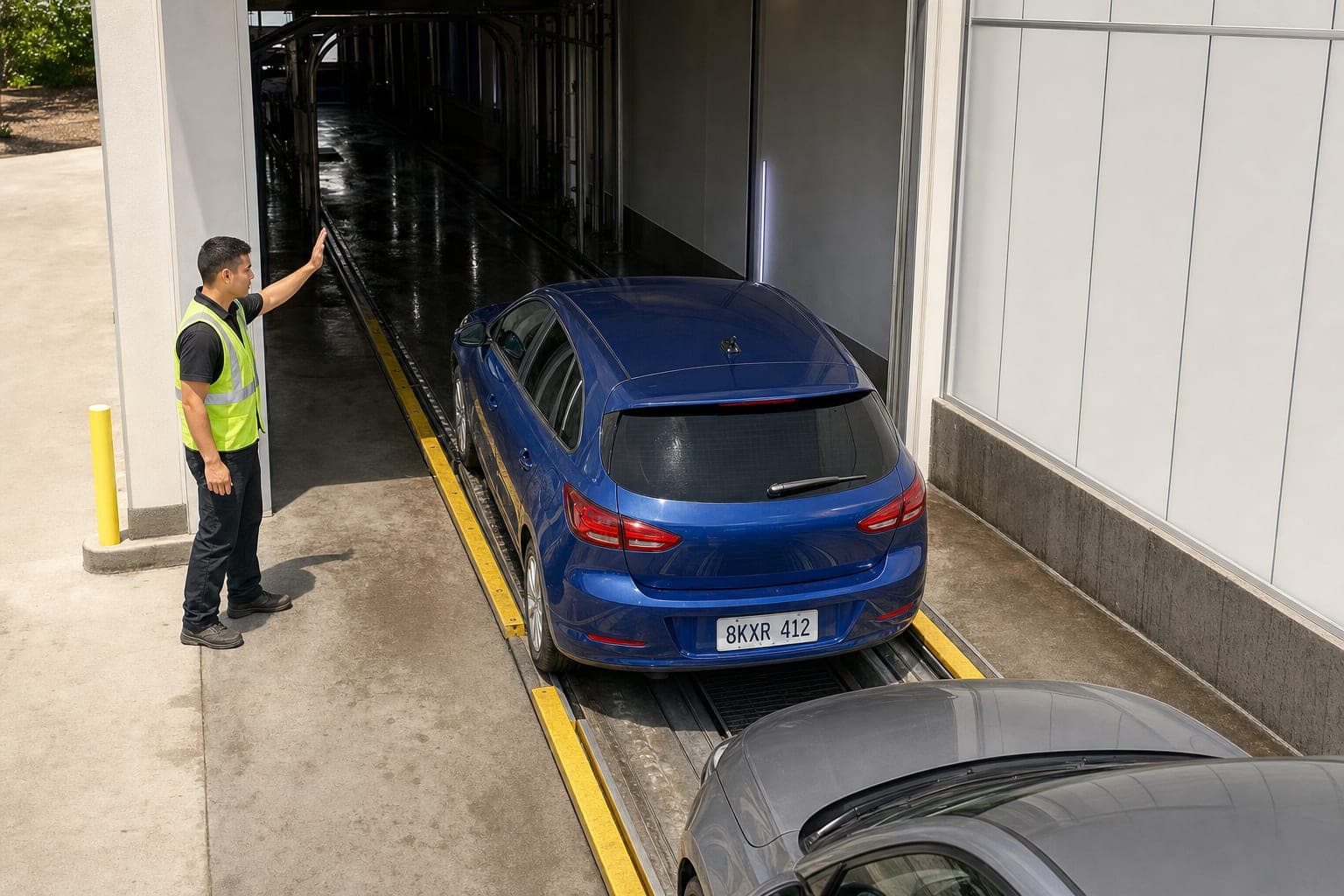
Loading time is the stretch between a car reaching the tunnel entrance and it sitting on the conveyor, ready to be pulled through. The wash that follows is a separate number, time in the tunnel, and it barely moves from car to car. Loading is where the variation is.
Loading time = the time the car was loaded − the time it entered. Time in the tunnel = the time it exited − the time it was loaded. Together they make up the whole pass.
Why loading decides your throughput
Cars ride the conveyor one behind another, and the spacing between them is set at the entrance. While one car is still loading, the next cannot follow it on, and the conveyor keeps moving with that stretch of track empty. When there is a line, every slow load is a gap the tunnel carries all the way through: the lost throughput that cars per hour on its own will not show you.
An example: three cars in a row
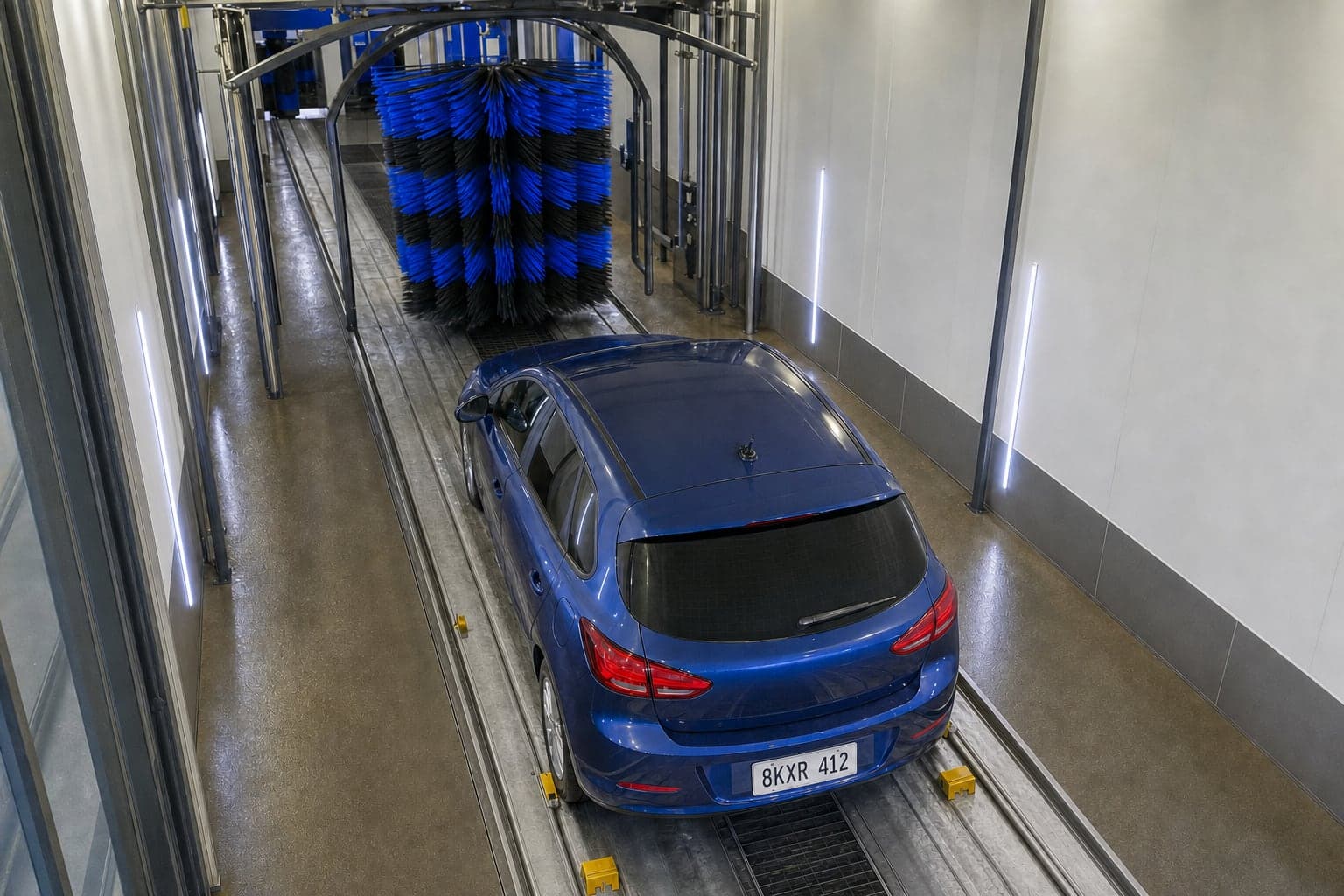
Take the three cars on our car wash page. The first loaded in 42 seconds, the second in 31 and the third in 1 minute 4 seconds. Their time in the tunnel was within eight seconds of each other. The third car is the one worth a look: it took twice as long to load as the second, for a wash that took the same time.
Averaged over an hour, one slow load disappears. Listed car by car, it stands out, and so does the next one like it.
What slows a load
- First-time drivers who are not sure where to stop, whether to steer or when to go into neutral.
- Cars lined up off the guide rail that have to back up and try again.
- Attendants waiting for the car in front to clear before calling the next one forward.
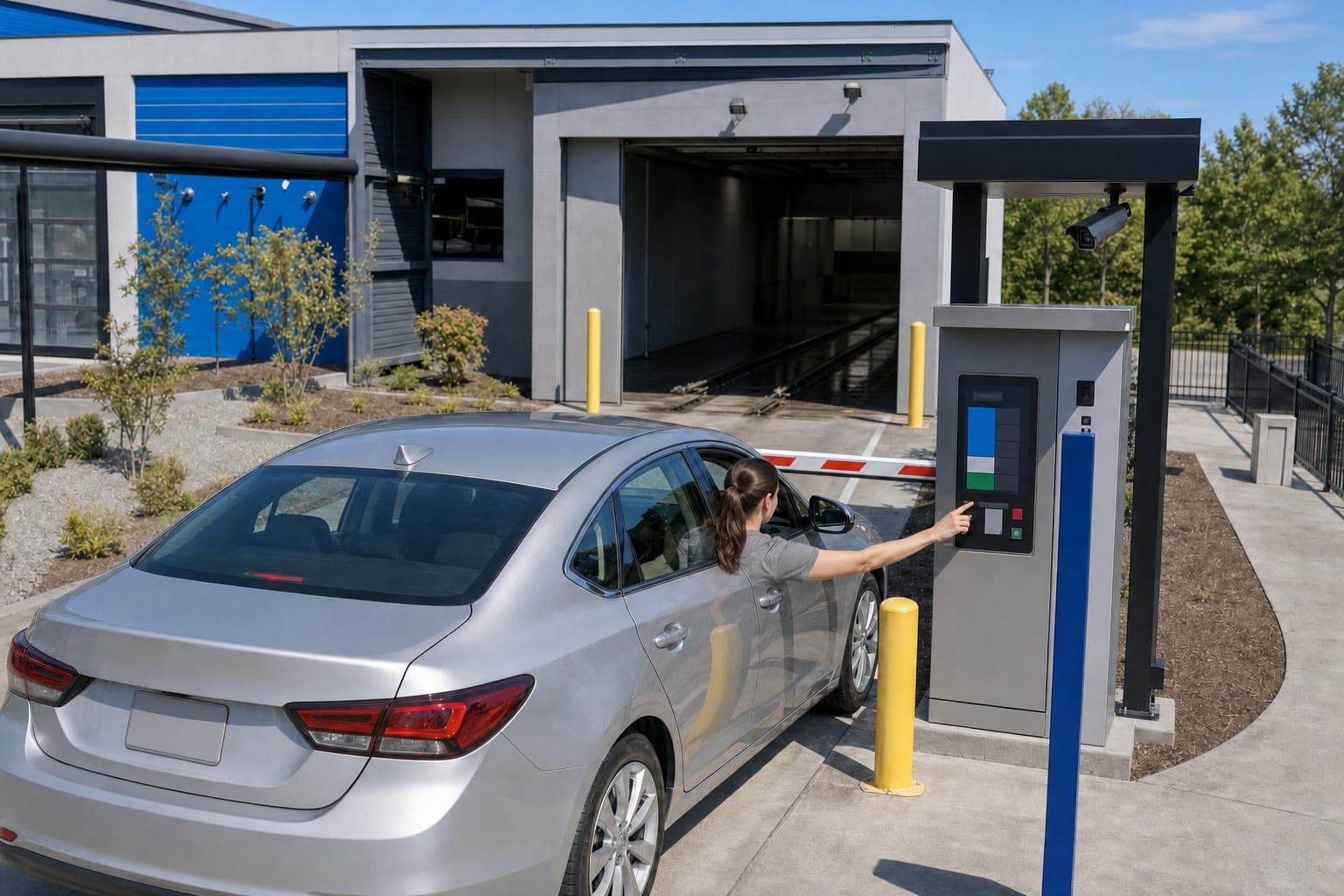
- The pay station holding cars back with plan sales, payment problems or a missed plate read, so they reach the entrance one at a time instead of ready to go.
- Vehicles that need extra care, such as wide tires, low clearance or roof racks.
How to cut loading time
- Make the entrance obvious: clear signs and markings for where to line up, when to go into neutral and when to let go of the wheel.
- Have the attendant line up the next car while the last one is still loading, not after it has gone.
- Keep the pay station moving. Members whose plates are read automatically should not wait behind a plan sale. Our post on matching car counts to the POS covers what happens when that read fails.
- Look at the slowest loads by hour and by shift. A shift that loads consistently slower is a training conversation, not a guess.
- Change one thing at a time and time the loads before and after, so you know what actually helped.
How to measure loading time on every car
A stopwatch at the entrance works for an afternoon. To see every car, every day, the moments have to be stamped automatically. BayCam reads the cameras already watching your tunnel and stamps each car when it enters, when it is loaded and when it exits, so every pass splits into loading time and time in the tunnel, and the slowest load of the day is flagged instead of averaged away.
The conveyor runs at one speed all day. Loading time is the part you can actually change.
Frequently asked questions
What is loading time at a car wash?
The time between a car arriving at the tunnel entrance and it being on the conveyor, ready to be pulled through. It does not include the wash itself, which is time in the tunnel.
How long should it take to load a car onto a conveyor?
There is no published standard worth aiming for, and it depends on your entrance. Measure your own loads first: the useful numbers are your typical load and how often a load runs well past it.
How do I speed up loading at my car wash?
Make the entrance obvious to first-time drivers, have the attendant line up the next car while the last one is still loading, and keep the pay station from metering cars to the entrance. Time loads before and after each change so you know which one worked.
Can I measure loading time without a stopwatch?
Yes. BayCam reads the existing tunnel cameras and stamps when each car enters and when it is loaded, so every load is timed without anyone writing it down.