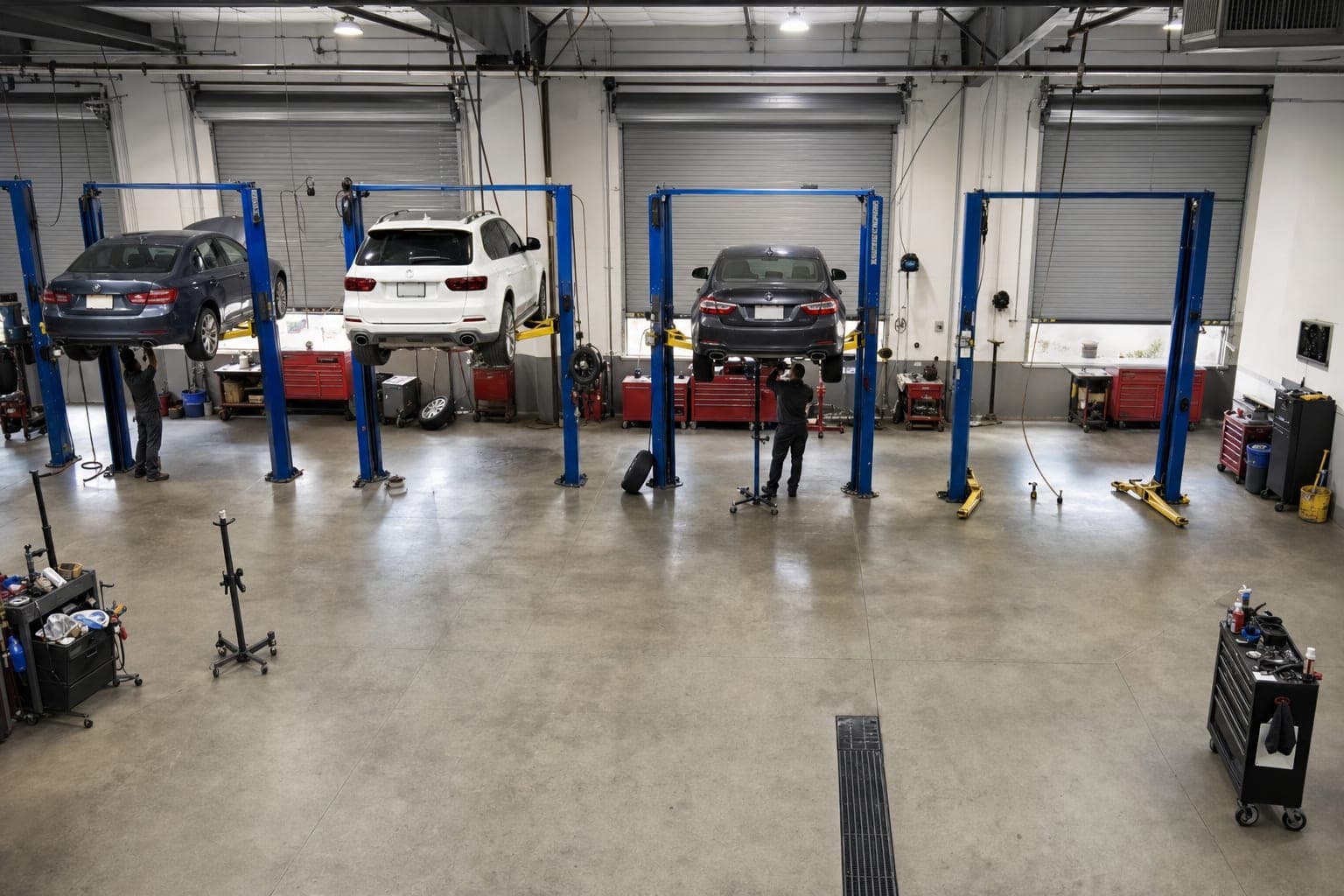
Ask most shop owners how busy their bays are and they will tell you: full. Every lift has a car on it from open to close. But a bay with a car in it and a bay that is earning are two different things, and the gap between them is where a lot of a shop’s capacity quietly goes.
Bay utilization is the measure that separates the two. Done properly, it tells you how much of the time a bay was held, someone was actually working on the car in it.
Occupied is not the same as utilized
The common mistake is to divide occupied hours by open hours and call it utilization. That number will almost always look healthy, because a car sitting on a lift waiting for parts, for approval or for someone to call the customer still counts as occupied.
A more honest definition is: time someone was working on the car, divided by the time the bay was held. The denominator starts when the bay is committed to a car and ends when it is free for the next one.
The timestamps you need
To calculate it per job, you need a handful of moments, each with a time on it:
- Door open and car in bay — when the bay is committed to this job.
- Tech at car and hood up — when someone starts working.
- Hood down — when the work stops.
- Cashed out — when the repair order is closed in your shop software.
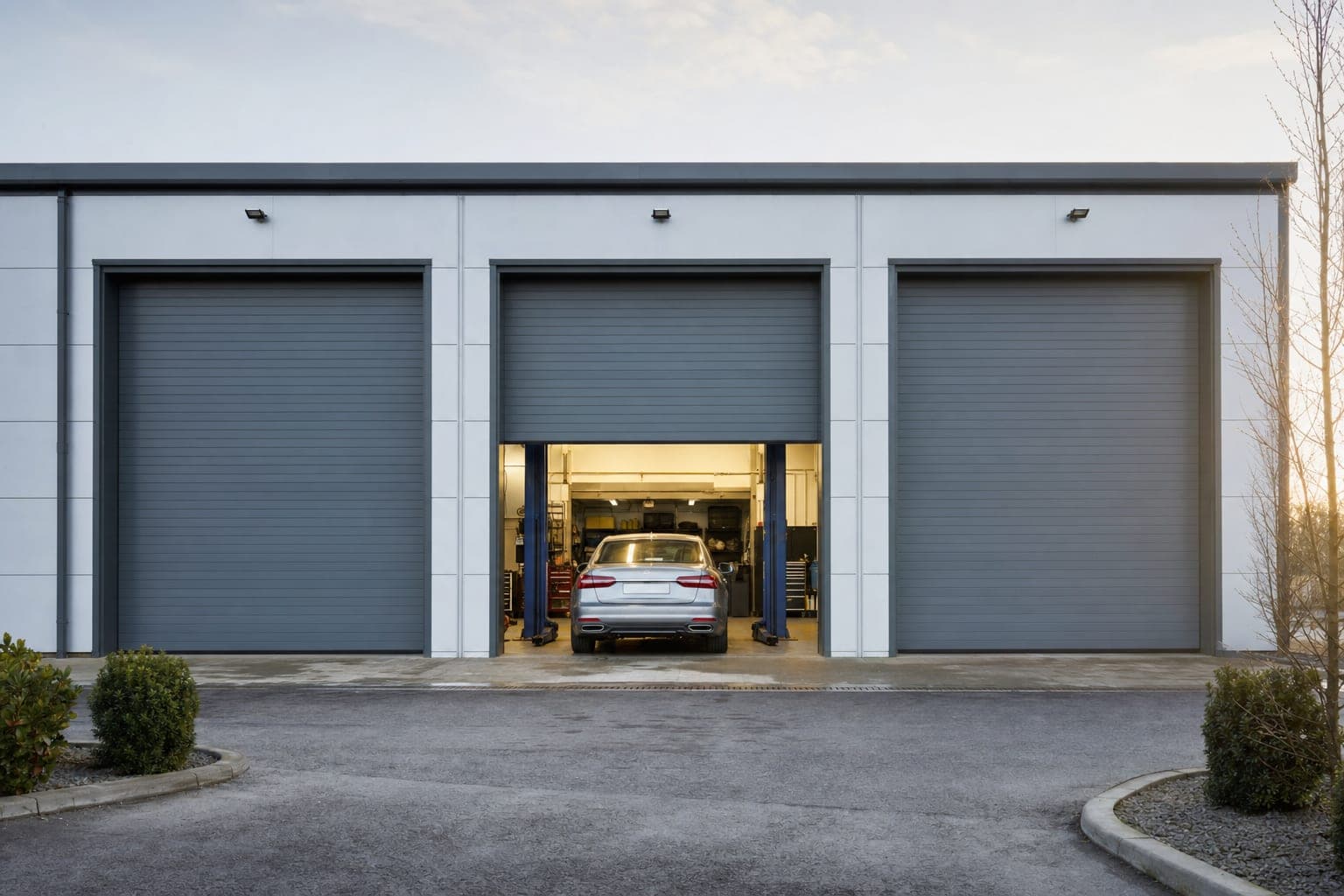
- Car out and door closed — when the bay is genuinely free again.
Everything between those stamps is either work or waiting. Add up the work, add up the waiting, and the split is your utilization for that visit.
A worked example
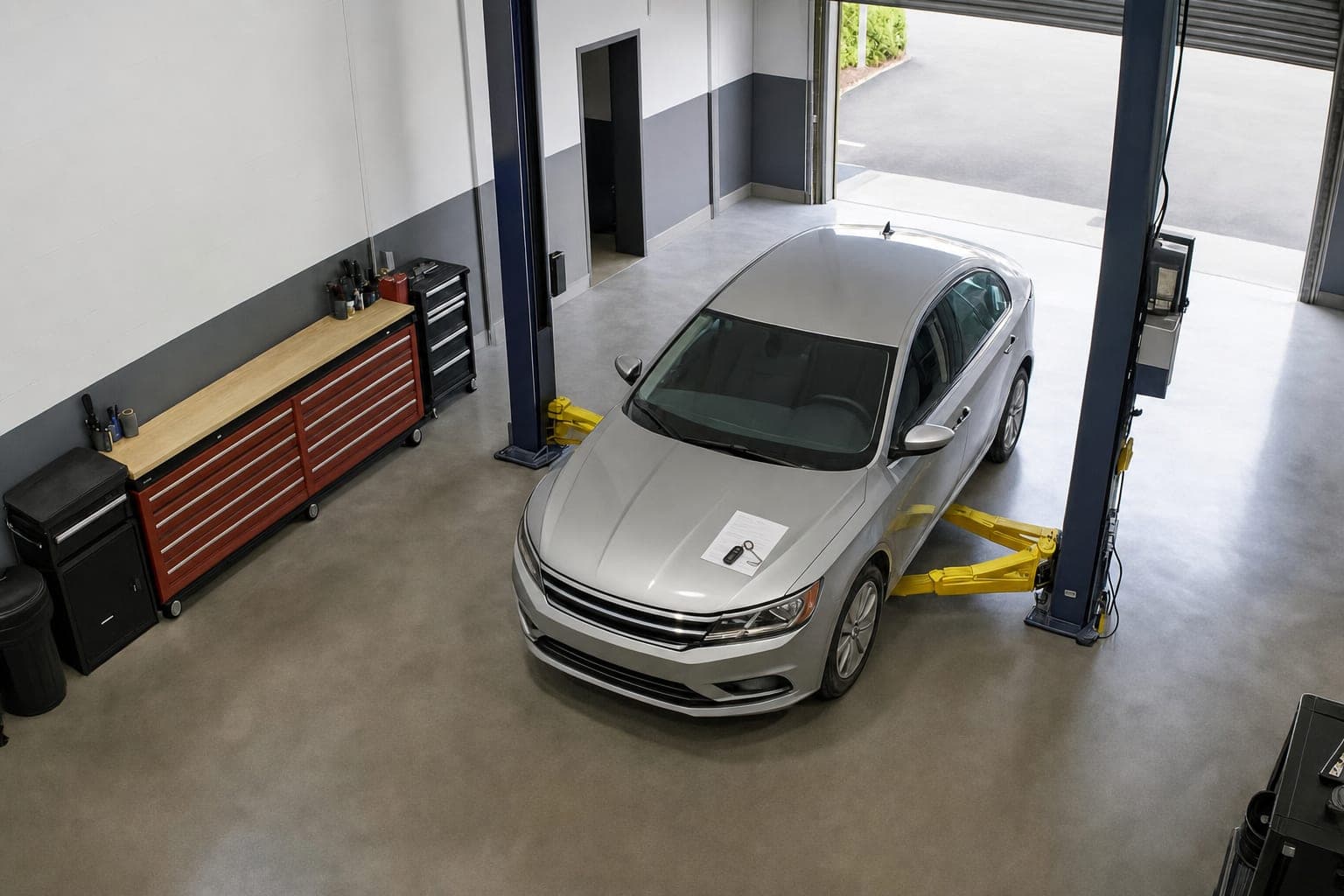
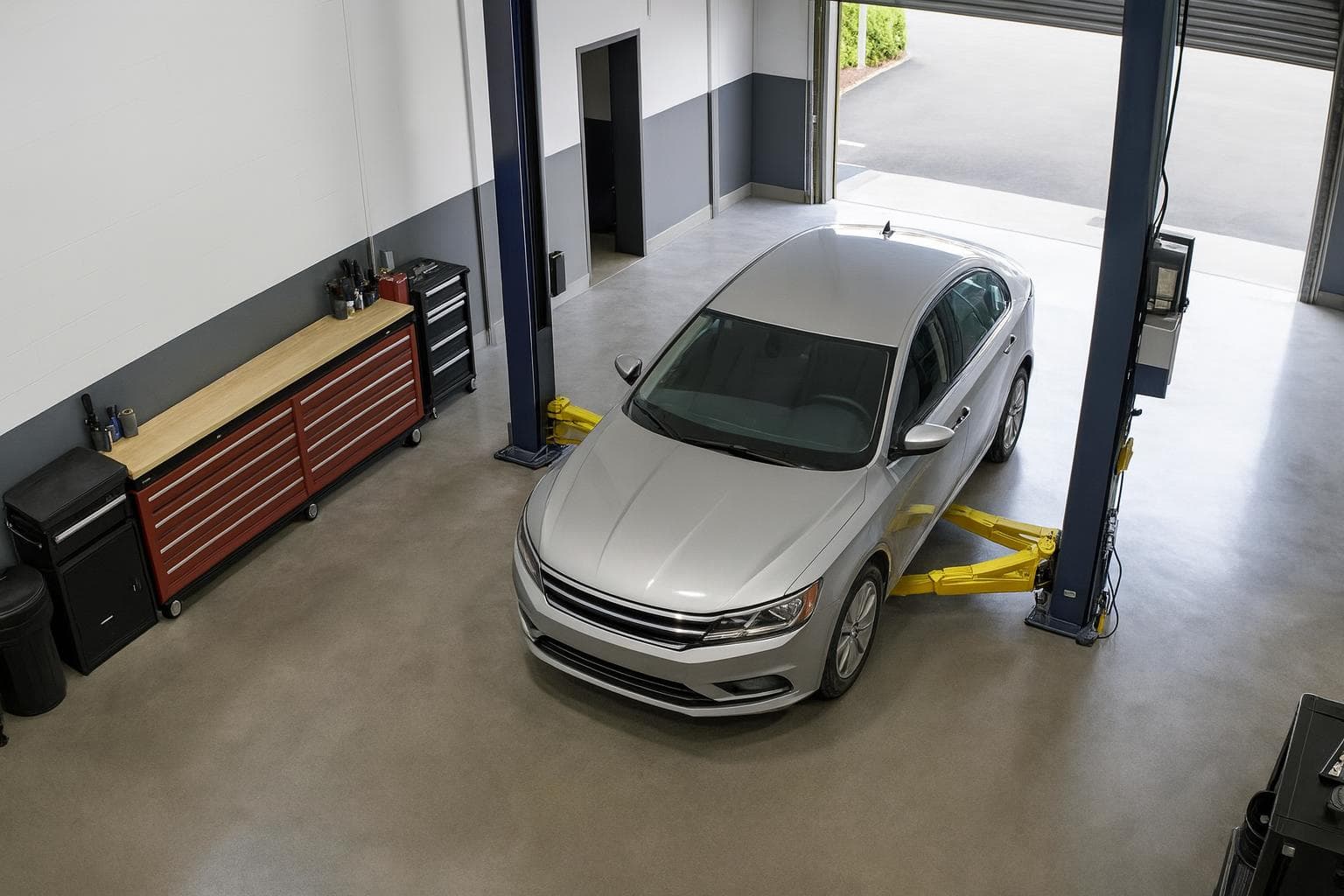
Take the illustrative Bay 02 visit on our home page. The car is in the bay for about half an hour. Someone is in front of it — looking it over, then working under the hood — for a little under fifteen minutes of that. The rest is the car waiting before anyone gets to it, a finished car waiting to be billed, and a paid car still holding the bay.
Measured as occupancy, that bay was busy the whole time. Measured as utilization, it worked for about half of it. Neither the tech nor the service writer did anything wrong; the time simply fell between people.
Why shops rarely measure it
Getting those stamps by hand means asking techs to clock in and out of every job, every time, and asking someone at the counter to note when cars leave. It works for a week. Then the clock-ins drift, the notes stop, and the number goes back to being a feeling.
This is the problem BayCam was built for. It reads the stamps from the cameras a shop already has — the roller door, the car, the person at it, the hood — and matches each visit to its repair order, so utilization is measured on every job without anyone pressing anything.
What to do with the number
- Compare bays, not just techs. A bay that consistently runs lower often has a layout or a lift problem, not a people problem.
- Look at the waiting, stretch by stretch. Time before work starts and time after it ends usually have different causes and different fixes.
- Track it weekly. A single day is noisy; the trend is what tells you whether a change worked.
A full shop and a productive shop look identical from the parking lot. Utilization is how you tell them apart.