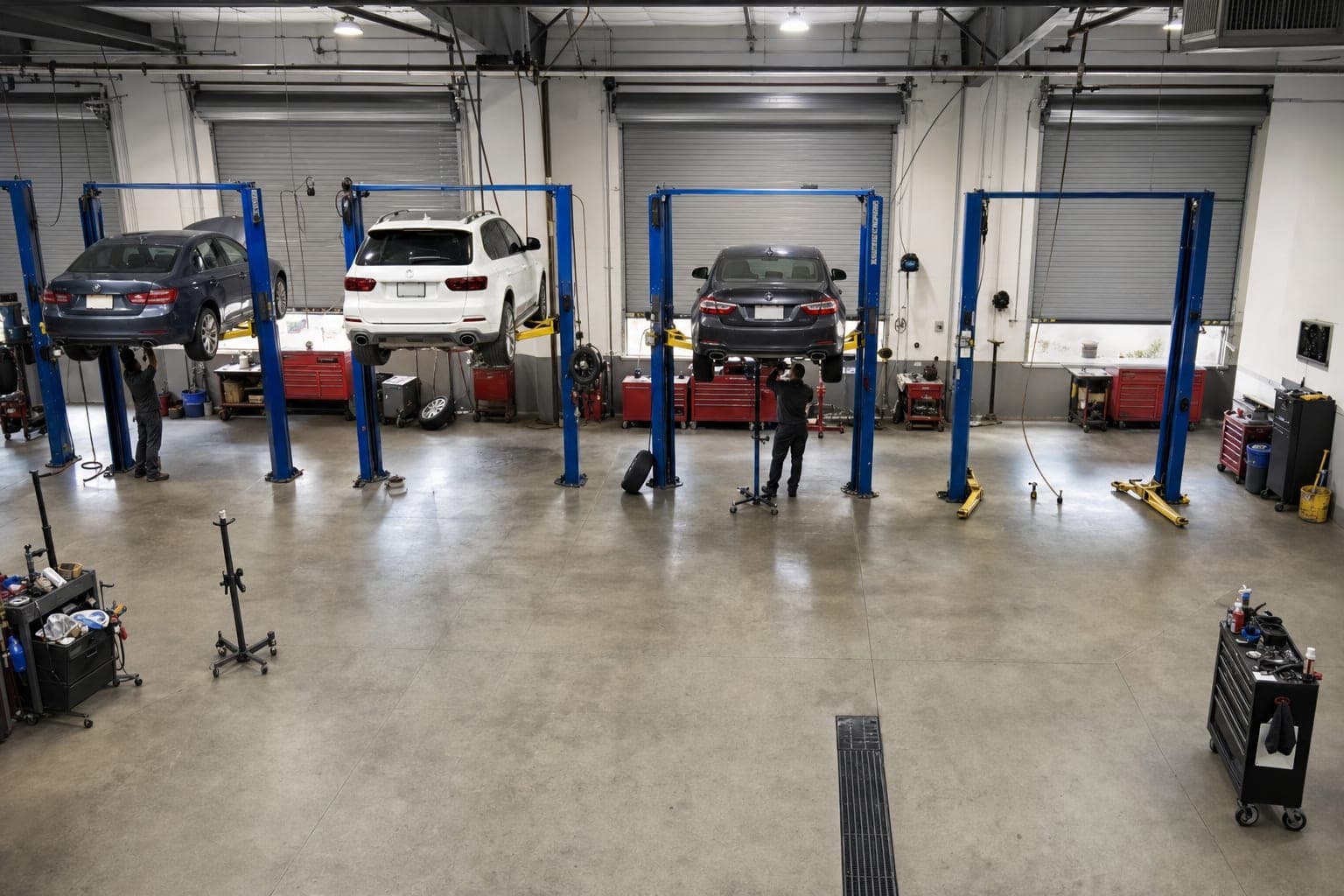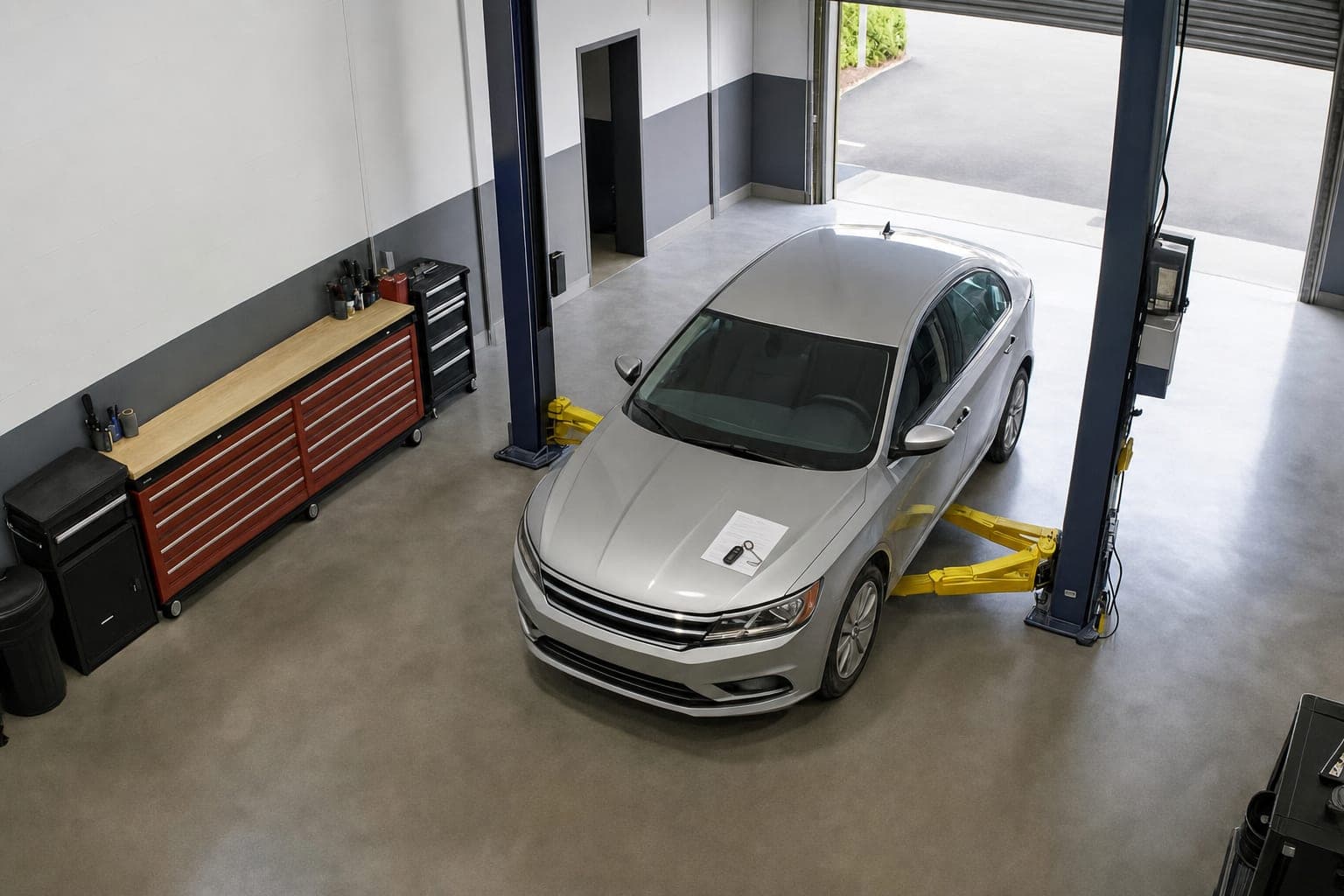
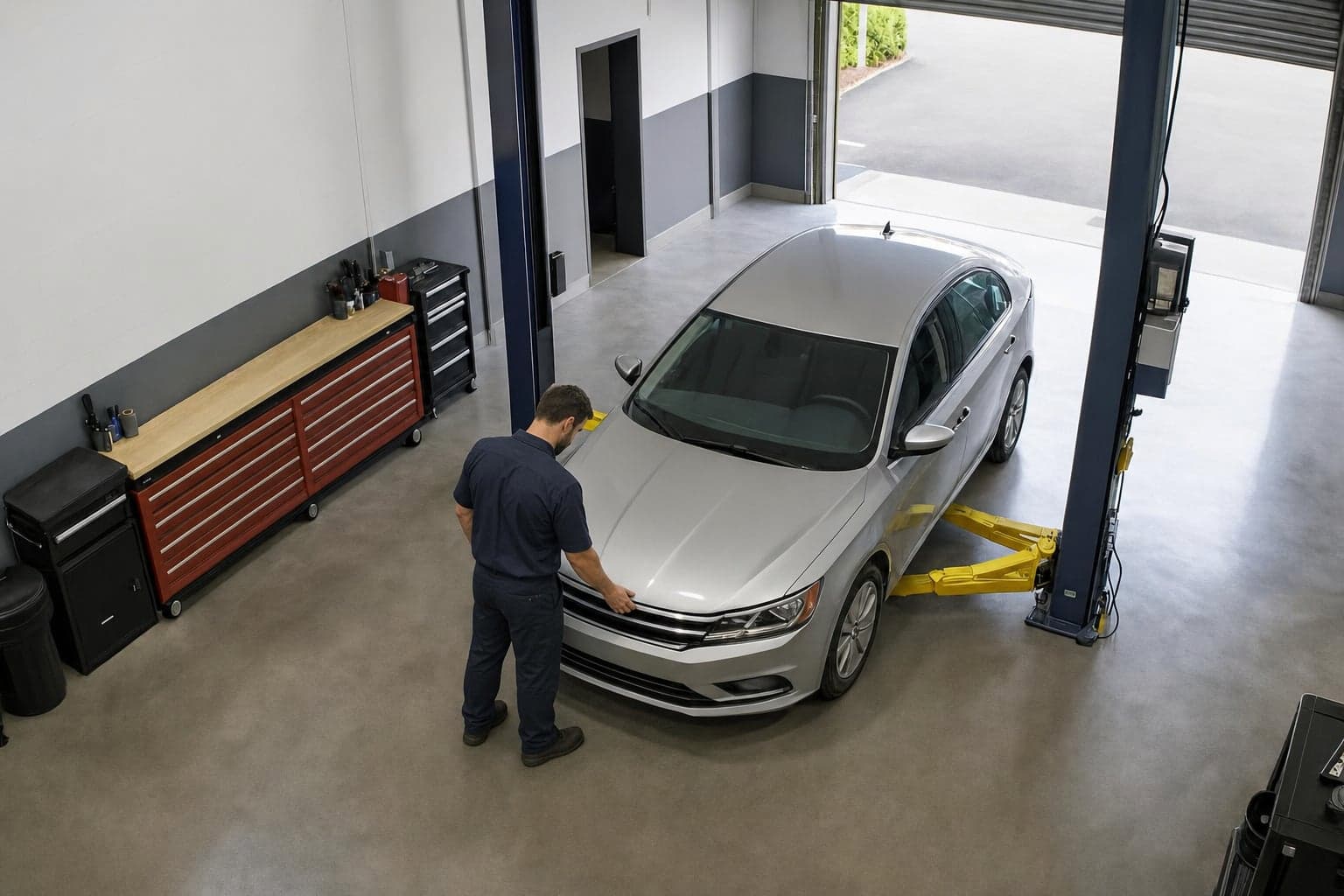
The work is done. The hood is down, the tech has moved on, and the car is ready to go. And it sits there — on the lift, in the bay — until someone closes the ticket, calls the customer and moves it out.
That stretch is invisible on almost every report a shop runs. Your shop software knows when the repair order closed. Your techs know when they finished. Nobody is measuring the time in between, and that time is a bay that could be taking the next car.
Why it hides so well
It does not belong to anyone. The tech’s job ended at hood down; the service writer’s starts when they get to the ticket. A car waiting to be billed is not late on anyone’s list, so it never shows up as a problem — just as a bay that always seems to be full.
Working out what it costs
You do not need an industry benchmark to price it; you need your own numbers. Take the average time finished cars sit before they are cashed out, multiply by the number of jobs a bay does in a day, and compare that to how long a typical job takes in that bay.
If finished cars routinely wait twenty minutes and a bay turns eight jobs a day, that is well over two hours of bay time a day spent holding cars that are already done. Whether that is one extra oil change or one extra brake job, it is capacity you are paying for and not selling.
How shops shorten it
- Make hood down visible to the counter the moment it happens, so billing starts when the work ends rather than when someone notices.
- Move finished cars out of the bay to a ready line, even if the customer is not there yet.
- Call or text the customer from the bay, not after the ticket is closed.
- Review the longest waits each week. They usually share a cause — a parts return, an approval, a payment step.
Measure it first
Each of those fixes is simple. The hard part is knowing how big the gap really is and which bays it lives in. BayCam stamps hood down from the camera and cashed out from your shop software, then ranks the gap between them worst first, so you can see the problem in minutes and dollars rather than guess at it.
The cheapest bay time you will ever find is the time a finished car spends waiting for its bill.